
By Amy Gillett, Vice President — Education, William Davidson Institute at the University of Michigan
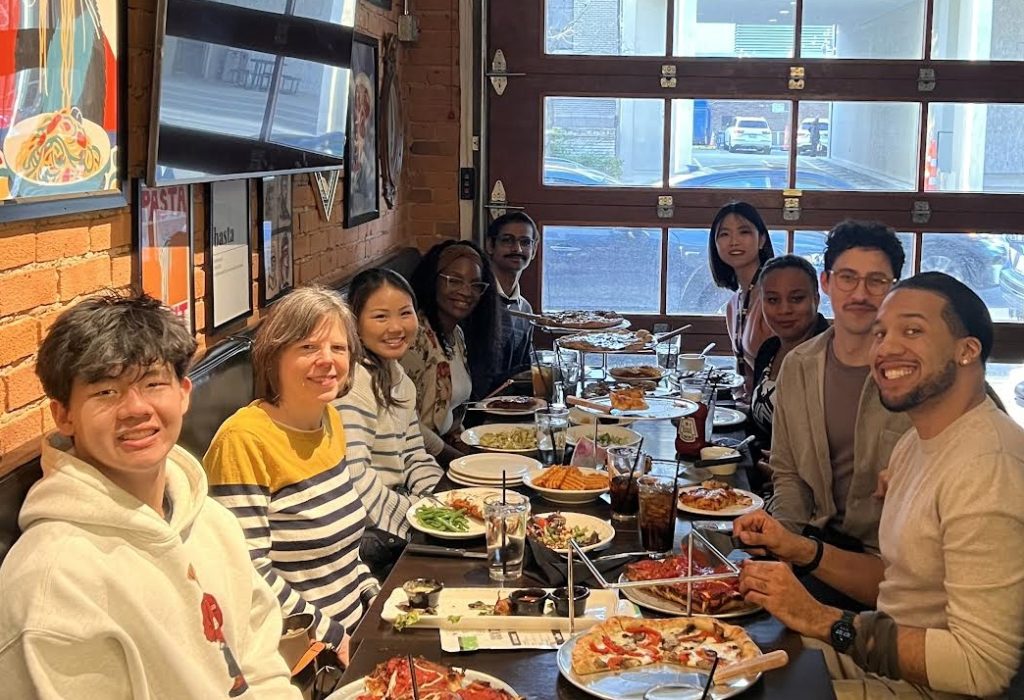
If Cohort 1 proved this program could work, Cohort 2 proved just how far it could go. Over eight weeks, 127 students from Egypt, Libya, Morocco, and the United States took on real challenges in their communities — from healthcare access to food insecurity — and built solutions that surprised even their instructors and mentors.
At the William Davidson Institute, we’ve been running global, team-based virtual exchange programs since 2017, and I’ve seen the outcomes repeat themselves again and again. Students — from all majors, often with no prior business coursework — come away with real entrepreneurial skills and the confidence to start something of their own. They build friendships across time zones. They start to notice that the challenges in their communities aren't so different from the challenges in someone else's, halfway around the world. That's exactly what happened in Cohort 2.
Over two months, teams worked through every stage of designing a business: identifying problems, building solutions, stress-testing ideas, and ultimately pitching their concepts. It wasn't always easy. They were on different time zones, juggling packed class schedules, observing Ramadan for many, all while navigating cultural differences. But navigating that complexity is all part of the experience, and this group leaned into it.
At last month’s closing session, where winning pitches were announced, participant Sara Walid ElShalakany from Egypt summarized her experience in the program: "It was very insightful and engaging. I had an amazing time with my team, and I really enjoyed attending the meetings. I learned a lot and gained valuable experience."
The program mentors felt it, too. Noha Saada, based at the American University in Cairo, remarked that there were "amazing ideas in this cohort" and that she was struck by the perseverance and internal drive participants brought to the program.
The cohort wrapped up with a virtual pitch competition, and every team presented a concept designed to drive real social impact. Kim Barker, a program instructor from Eastern Michigan University (EMU), was impressed with how the pitches came together: "Each business case was solid. They were all very well done."
Nicolas Klotz, a mentor who also led the pitching session from Al Akhawayn University (AUI) in Morocco, sent students off with this guidance: "Use what you have learned in this program. It will help you in your interviews and when you talk about this program, your eyes will shine. You will be explaining something to the companies that will make you different. This will help you find a job."
One standout idea: A team from Egypt designing sustainable leather from banana waste — better for the environment, free of animal slaughter, and a real opportunity for local economies. It's exactly the kind of creative thinking this program is designed to unleash.
Three teams rose to the top, evaluated on everything from problem definition and innovation to social impact, target market research, financial analysis, and the strength of their business model canvas.
Members of the top team will receive a coaching and mentorship package.
Of the 29 pitches, here are the top three teams:
WeRead
WeRead took first place with their concept of a platform connecting buyers and sellers of used textbooks and handwritten class notes, making academic life more affordable while keeping materials in circulation. They've thought through the whole model — launching in Casablanca, building through campus ambassadors, reaching students on Instagram and parents on Facebook, and earning a commission on every transaction. Their mentor, Noha Saada, commented: "This was a super engaged team. All team members contributed and they showed their skills acquired in the program including design thinking and finance. This team and their winning video reflects the quality of the Entrepreneurship Exchange program overall."
MediFly
MediFly earned second place with a platform designed to ease one of Egypt's most pressing healthcare challenges. In major cities like Cairo and Giza, patients routinely face long waits, overcrowded hospitals, and too few physicians. MediFly offers chat, voice, and video consultations, paired with secure cloud-based medical records — a practical, patient-centered response to a system under strain. Kim Barker of EMU noted that "Covid taught us that we could do more online," and this team built a strong case for exactly that. AUI Mentor Nicolas Klotz praised them for their "clear and detailed presentation of financial information, so essential for a compelling pitch."
BetterWay
BetterWay came in third with a concept that tackles both food waste and food insecurity. By redistributing unsold branded food inventory to underserved communities at affordable prices, they've built a model that reduces waste while getting quality products to people who need them most. Judges were impressed by the professionalism and high production value of their pitch video.
View the winning pitches above, or click on our YouTube playlist here.
Congratulations to the winners … and to every student who earned a certificate in our latest cohort of the Entrepreneurship Exchange!
A thank you, merci, and شكراً to our U.S. partners — Eastern Michigan University, the University of Michigan, Wayne State University, and Michigan State University — and to our MENA partners: the American University in Cairo, BYTE in Libya, and Al Akhawayn University in Morocco.